Wondering what daily life in Rosedale’s ravine enclave actually feels like? If you are drawn to quiet streets, heritage homes, and green space that feels surprisingly close to downtown, Rosedale stands apart in a very specific way. Understanding the area means looking beyond prestige and into how its streets, homes, trails, and topography shape everyday living. Let’s dive in.
Rosedale feels tucked away
One of the defining qualities of Rosedale is how sheltered it feels despite its central Toronto location. The City of Toronto describes North and South Rosedale as early picturesque suburbs with curving streets, mature tree canopy, park-like lots, and architectural styles dating from the 1880s to the 1930s.
That physical setting matters. North Rosedale sits on a secluded plateau bounded by the Park Drive Reservation ravine and the Moore Park Ravine, which helps preserve the enclave feel. In practical terms, you get a neighbourhood that feels calm and separate without giving up proximity to the downtown core.
Heritage shapes the streetscape
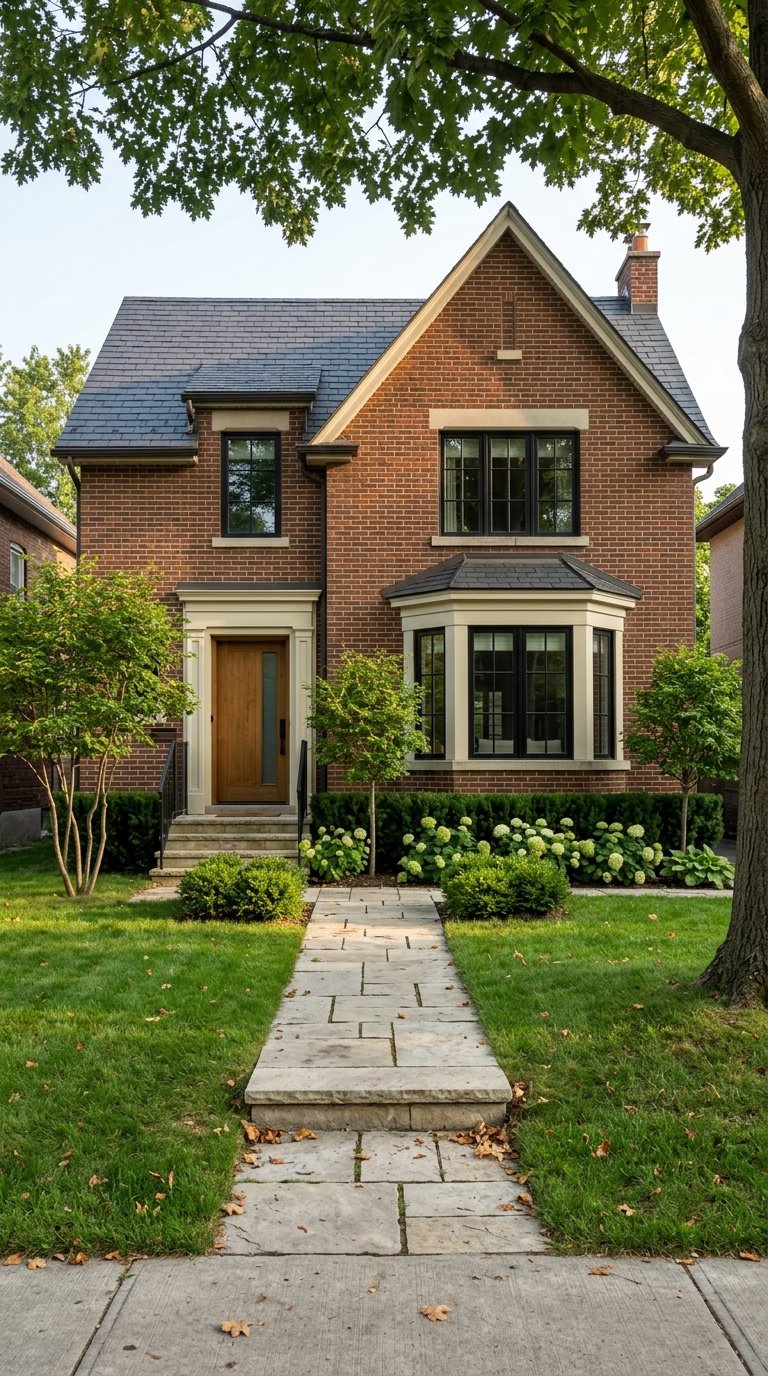
If you enjoy architecture, Rosedale offers a streetscape with unusual depth and continuity. South Rosedale’s heritage plan notes that most of its building stock is 80 years old or older and remains largely intact, which gives the area a strong visual identity.
The neighbourhood is not uniform, and that is part of its appeal. The City notes distinct visual qualities across 38 streets, including grass boulevards, sidewalks on one side or alternating sides, curving roads, and cul-de-sacs. That variety creates a more organic, less grid-like experience than many central-city neighbourhoods.
Housing is mostly low-rise and long-term
Rosedale-Moore Park had 10,702 private dwellings in the City’s 2016 neighbourhood profile. Single-detached homes made up 48% of the housing stock, semi-detached homes 25%, row houses 8%, duplexes 7%, apartment buildings under five storeys 9%, and apartment buildings of five storeys or more 2%.
That mix helps explain the area’s character. Detached and semi-detached homes remain the dominant housing form, while condo inventory exists but plays a secondary role. The same profile shows 5,565 owner households and 4,490 renter households, which supports the impression of a neighbourhood with a more established, long-term feel.
The ravine network is part of everyday life
For many buyers, the biggest surprise about living in Rosedale is how directly the ravine landscape shapes daily routines. This is not just a neighbourhood near parks. It is a neighbourhood where trail access and green edges are built into the experience of walking, running, or heading out with a dog.
The City identifies Milkman’s Lane as a 300-metre gravel trail that has existed for more than 130 years. It connects Rosedale to the Don Valley trail network and Don Valley Brick Works Park, and it is used by hikers, joggers, dog walkers, and cyclists.
The Rosedale Valley Road multi-use trail adds another layer of access. According to the City, it extends from Bayview Avenue to Park Road and connects a series of green spaces, including St. James Cemetery, Wellesley Park, Toronto Necropolis Park, Rekai Family Parkette, and Lawren Harris Park.
Green space comes with real terrain
The ravine setting is beautiful, but it also comes with practical realities. Some access points are stair-heavy, and not every route is equally easy to use for all mobility needs.
The City has noted that the Wellesley Park connection historically was not accessible to bicycles, strollers, or mobility aids, even as an upgraded connection has been developed. For buyers, that means the landscape is a true part of the lifestyle equation. The topography is part of the charm, but also part of the day-to-day logistics.
Yonge Street adds convenience nearby
Although Rosedale feels private, it is not cut off. On Yonge Street, the Rosedale Main Street BIA runs from Crescent Road to Woodlawn Avenue and includes more than 180 businesses.
The City describes the strip as a mix of art, wellness, restaurants, cafes, and boutiques. The BIA also hosts seasonal events such as the Rosedale Art Fair in June and the Cavalcade of Lights Tree Lighting Festival in November, which adds a village-like layer to the neighbourhood experience.
Transit keeps downtown close
For a neighbourhood that can feel secluded, Rosedale is still well connected. Rosedale Station sits on Line 1 at 7 Crescent Road near Yonge and Crescent, with the 82 Rosedale, 97 Yonge, and 320 Yonge surface routes also serving the area.
That balance is a major part of the appeal. You can enjoy a quieter residential setting while keeping straightforward access to the rest of the city. For many buyers, that combination is hard to replicate.
What living here feels like day to day
Day to day, Rosedale often feels less like a busy central neighbourhood and more like a pocket of mature landscape threaded into the city. Curving streets, older homes, and the tree canopy soften the urban environment in a way that is unusual so close to downtown.
At the same time, the neighbourhood is not trying to be everything for everyone. If you prefer a flatter street grid, a more modern housing stock, or fully barrier-free outdoor routes, other central Toronto areas may feel more straightforward. Rosedale’s appeal is specific, and that is exactly why it resonates so strongly with the right buyer.
Heritage ownership needs a careful approach
If you are considering a home in North or South Rosedale, it is important to understand the heritage context before you buy. Because both are heritage conservation districts, exterior alterations and demolition are reviewed under the Ontario Heritage Act.
That does not mean change is impossible. It does mean buyers should expect more design sensitivity and a higher likelihood of heritage-related review than in a newer neighbourhood. For anyone who values architectural integrity, that framework can be part of the attraction, but it is best approached with clear expectations.
Who Rosedale tends to suit best
Based on the City’s heritage, trail, BIA, and transit information, Rosedale is especially compelling for buyers who want a quiet, low-rise, heritage-rich neighbourhood with meaningful ravine access and a close-in location. It tends to appeal to people who value atmosphere, privacy, and a strong sense of place.
There are also signs of an established resident base. A City background document notes that 27.9% of Rosedale-Moore Park residents were age 65 or older in 2021, which reinforces the sense of a mature neighbourhood with long-term roots.
Why the enclave quality matters
In many Toronto neighbourhoods, convenience is the headline feature. In Rosedale, the deeper value is often the experience of living somewhere with physical and visual continuity. The ravines, heritage homes, and winding streets create a setting that feels preserved rather than assembled.
For design-minded buyers, that can be especially meaningful. You are not just choosing square footage or a postal code. You are choosing a neighbourhood where architecture, landscape, and daily rhythm still feel closely connected.
If you are weighing whether Rosedale matches the way you want to live, a nuanced neighbourhood read matters. The right guidance can help you assess not only the home itself, but also the heritage context, street character, access patterns, and long-term fit. If you are considering a move in Central Toronto, Jason DeLuca offers a thoughtful, design-aware perspective on neighbourhoods like Rosedale.
FAQs
What makes Rosedale feel like a ravine enclave?
- North Rosedale sits on a secluded plateau bounded by the Park Drive Reservation ravine and the Moore Park Ravine, which helps create a sheltered, enclave-like setting.
What types of homes are common in Rosedale?
- In the City’s 2016 profile for Rosedale-Moore Park, single-detached homes made up 48% of the housing stock and semi-detached homes made up 25%, with smaller shares of row houses, duplexes, and apartments.
Does Rosedale have condos or mostly houses?
- The neighbourhood includes condos, but the housing mix is still primarily low-rise, with detached and semi-detached homes making up the largest share of the stock.
What is daily outdoor life like in Rosedale?
- Daily life often includes access to trails and ravine routes such as Milkman’s Lane and the Rosedale Valley Road multi-use trail, which connect residents to green space within the city.
Is Rosedale easy to get around without a car?
- Rosedale has direct subway access via Rosedale Station on Line 1, along with nearby surface routes including 82 Rosedale, 97 Yonge, and 320 Yonge.
Are there heritage rules for homes in Rosedale?
- Yes. North and South Rosedale are heritage conservation districts, so exterior alterations and demolition are reviewed under the Ontario Heritage Act.
What are the main tradeoffs of living in Rosedale?
- The main practical considerations are heritage-related renovation constraints, hilly topography, and some scenic ravine routes that are not fully barrier-free.
Who is Rosedale best suited for?
- Rosedale tends to suit buyers looking for a quiet, heritage-rich, low-rise neighbourhood with ravine access, mature streetscapes, and close proximity to downtown Toronto.