Rosedale is not one market. It is a collection of micro-markets shaped by ravines, heritage character, and lot-by-lot nuances that move prices more than citywide trends ever could. If you are planning to buy or sell here, you already know the homes are unique and the stakes are high. You want clarity on what truly drives value and how to navigate approvals that can affect timelines and outcomes. This guide breaks down the essentials so you can make confident decisions without surprises. Let’s dive in.
What Sets Rosedale Apart
Rosedale sits just north of Downtown Toronto, wrapped by winding streets and multiple ravines that create privacy and a distinct sense of place. The natural topography and mature tree canopy set it apart from nearby grid-pattern neighbourhoods. It is widely recognized as a higher-value enclave with a concentration of single-family detached homes and low density. Inventory tends to be limited relative to demand, which helps sustain a persistent premium over broader city averages.
Housing Types And Lot Patterns
Predominant homes
You will find mostly single-family detached houses, from original estate homes to thoughtful infill and contemporary custom builds. Low-rise apartments and row formats cluster near major corridors. The mix spans well-preserved historic properties and later rebuilds designed to capture ravine views and indoor-outdoor living.
Lot sizes and shapes
Lot sizes vary widely across the area. Many inner-street parcels resemble pre-war dimensions, often in the 30–50 foot frontage range, while certain avenues and crescents offer wider and deeper estate-scale lots. Ravine-front and corner properties typically command a premium for privacy and outlook. Irregular shapes and slopes are common, which can affect buildable area, garage access, and construction costs.
Architectural eras
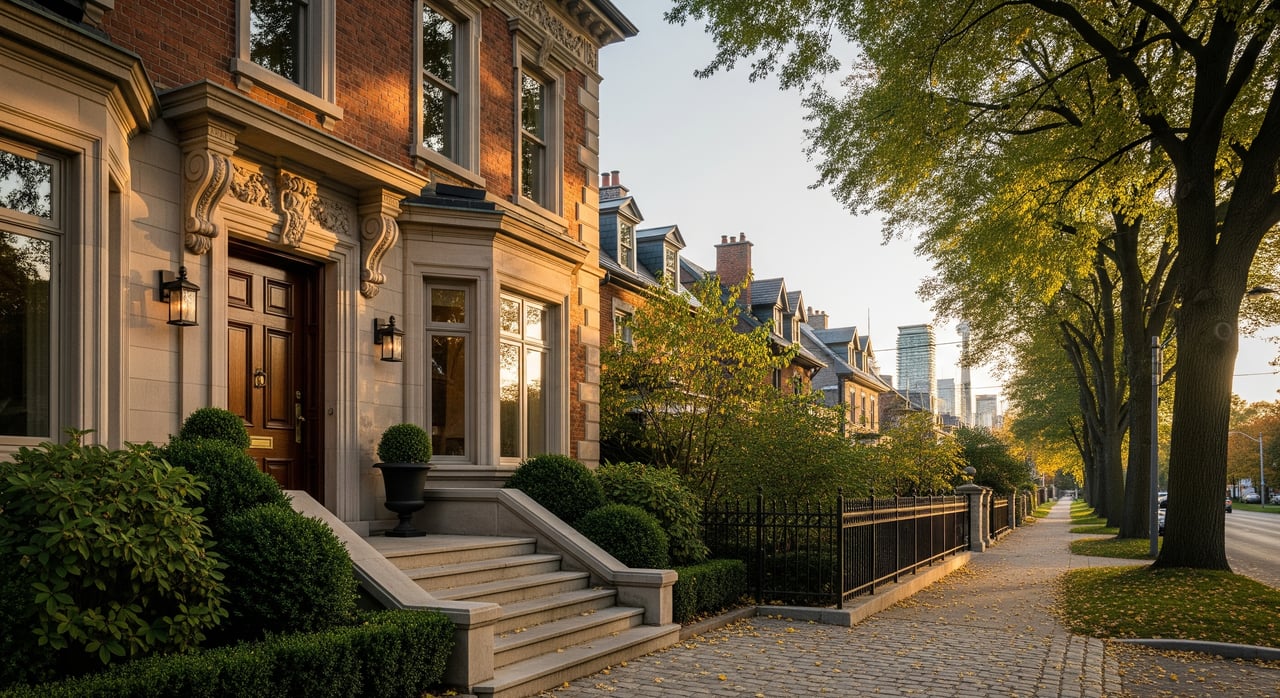
Rosedale’s streetscapes reflect more than a century of architecture. You will see late 19th and early 20th century Victorian and Edwardian homes, followed by Georgian, Tudor, and Craftsman influences from the 1910s through the 1930s. Post-war infill appears in places, and in recent decades, tasteful tear-downs have made way for curated luxury rebuilds. The heritage fabric is visible throughout and plays a material role in how buyers perceive value.
Heritage, Ravines and Approvals
Heritage controls
Parts of Rosedale fall under municipal heritage policies and the Ontario Heritage Act. If a property is designated, demolitions and external alterations may require heritage permits and specific conservation measures. Even non-designated homes near heritage assets can be reviewed for compatibility. These factors often shape timelines and design flexibility for major renovations or rebuilds.
Zoning and variances
Most of the neighbourhood is low-density residential under the city’s zoning by-law, with rules for height, setbacks, lot coverage, and parking. Many projects pursue minor variances through the Committee of Adjustment to achieve contemporary floor area or site plan changes. Expect multi-stage approvals for complex files, which can lengthen timelines for both buyers and sellers.
Ravines and tree protection
Rosedale’s ravines and valleylands trigger natural heritage controls that limit how close you can build to slopes and waterways. Private tree protection rules require permits to remove larger trees, which are a defining part of the streetscape. Properties near regulated features may also require conservation authority review for grading, retaining walls, or shoreline work. These layers help preserve the neighbourhood’s character but can constrain development.
Site conditions to check
Topography drives costs. Sloped sites often require more complex foundations, drainage plans, and waterproofing. In older areas, it is wise to investigate stormwater and basement flooding histories and understand any municipal upgrades nearby. Easements and rights-of-way are not unusual on historic parcels, so a current survey and title review are essential.
Rosedale Micro-Markets And Value
What drives value here
- Ravine adjacency and views. Premiums reflect outlook, privacy, and elevation. The specific street and vantage point matter as much as the view itself.
- Streetscape and address. Continuous heritage character and mature canopy often lift demand on certain crescents and roads.
- Lot size and buildability. Regular, wider lots that support modern layouts and parking tend to outperform irregular or steep sites.
- Condition and character. Well-maintained heritage features and updated systems have strong appeal, especially when renovations respect the streetscape.
- Privacy and setback. Estate-like settings with buffers from neighbours are highly sought after near the core.
Streets that perform
While every block is different, crescents and streets with intact heritage façades, uninterrupted canopy, and consistent scale see stronger buyer response. On the other hand, interior lots with limited width or challenging slopes can trail the broader averages unless pricing reflects site realities.
Rosedale vs Nearby Areas
- Forest Hill. Also high-value with many large lots. Blocks often feel broader and more uniform in places compared to Rosedale’s ravine-driven curves.
- The Annex. Closer to university and urban amenities with more varied housing types. Buyer profiles often prioritize immediate walkability and mixed stock.
- Summerhill and Moore Park. Similar historic tone, with micro-differences in lot depth, street grid, and proximity to Yonge Street retail shaping demand and pricing.
Buyer Due Diligence Checklist
- Title and easements. Order a current title search to identify rights-of-way, restrictive covenants, and utility easements.
- Survey and topography. Confirm lot lines, setbacks, slope, and any pools or retaining structures. This informs renovation feasibility.
- Heritage status. Verify designation or district status and request documentation on prior heritage permits and any conditions.
- Tree and ravine constraints. Check for tree preservation requirements and whether conservation authority review may apply.
- Structure and drainage. Commission a thorough inspection focused on foundation, basement water ingress, and any municipal records on flooding.
- Zoning and potential. Review permitted floor area, height, parking, and likely variances with a planner or architect.
- Comparable sales. Rely on comps that match the lot type, such as ravine-front, width, and street character, rather than broad averages.
Seller Strategy In Rosedale
Pre-list preparation
Proactive due diligence helps control the narrative during negotiations. Consider a current survey, a preliminary heritage review, and a tree inventory to prevent conditional-period surprises. Documentation that clarifies constraints and opportunities builds buyer confidence. It can also support a premium when paired with strong presentation.
Renovate or rebuild
Weigh the cost of upgrading older systems against the full scope of a teardown. Heritage and ravine layers, plus potential variances, add time and fees to rebuilds. High-quality, heritage-sensitive renovations typically perform well when they preserve streetscape character and scale. Overbuilding the lot or ignoring context risks a weaker return.
Marketing that moves the needle
In Rosedale, presentation is not cosmetic, it is strategic. Professional photography, video, and narrative-driven materials that highlight ravine exposure, canopy views, and architectural details can materially increase interest. Aerial perspectives are especially effective for ravine-edge homes. Pair this with pricing that reflects the right micro-comp set to reach both local and cross-border buyers.
Timelines And Costs To Expect
Renovations of older homes can take months, often revealing hidden work that increases budgets. Heritage-sensitive upgrades usually carry higher per-square-foot costs than generic renovations. Teardowns with heritage review, tree permits, and potential Committee of Adjustment hearings are typically measured in many months to over a year. Budget for meaningful soft costs across architecture, heritage consulting, arborist reports, engineering, and surveys.
Smart Negotiation And Comps
The best pricing decisions in Rosedale are hyper-specific. Segment your comparables by ravine vs interior, width and depth, slope, garage access, and streetscape continuity. Recognize that two houses with similar square footage can diverge materially on value once you account for privacy, view, and buildability. If you are a buyer, align your offer strategy with verified approvals and site risk. If you are a seller, anchor your asking price to the right peer group, not the entire neighbourhood average.
Work With A Design-Literate Advisor
Rosedale rewards thoughtful guidance that blends market insight with architectural sensibility. You want someone who can read a streetscape, understand heritage layers, and calibrate pricing to the exact lot and approval path. If you are planning a move in or out of the neighbourhood, tap a boutique approach that respects the character of your property while capturing its full market potential. To start a confidential conversation, connect with Jason DeLuca.
FAQs
How does ravine frontage affect Rosedale pricing?
- Ravine adjacency often commands a premium, but the amount depends on the specific street, view corridor, elevation, privacy, and lot size; use recent ravine-front comps for guidance.
Can I demolish and rebuild a home in Rosedale?
- Often yes, but expect heritage review, zoning checks, tree permits, and potential minor variances; build in additional time for multi-stage approvals.
Which Rosedale streets typically see stronger demand?
- Crescents and roads with continuous heritage façades, mature canopy, and consistent scale tend to perform better, though outcomes vary by lot width and ravine proximity.
Will a high-end renovation pay off in Rosedale?
- Heritage-sensitive renovations that preserve character and scale typically perform well, while overbuilding or ignoring context can reduce return.
What should I verify when buying near a ravine in Rosedale?
- Confirm conservation authority requirements, seek geotechnical review for slope stability, verify setbacks, and review insurance implications for the site.
Why is Rosedale inventory usually tight compared to Toronto overall?
- Turnover is driven by life-stage changes rather than speculation and the area’s appeal keeps demand high, leading to fewer listings and sustained premiums.