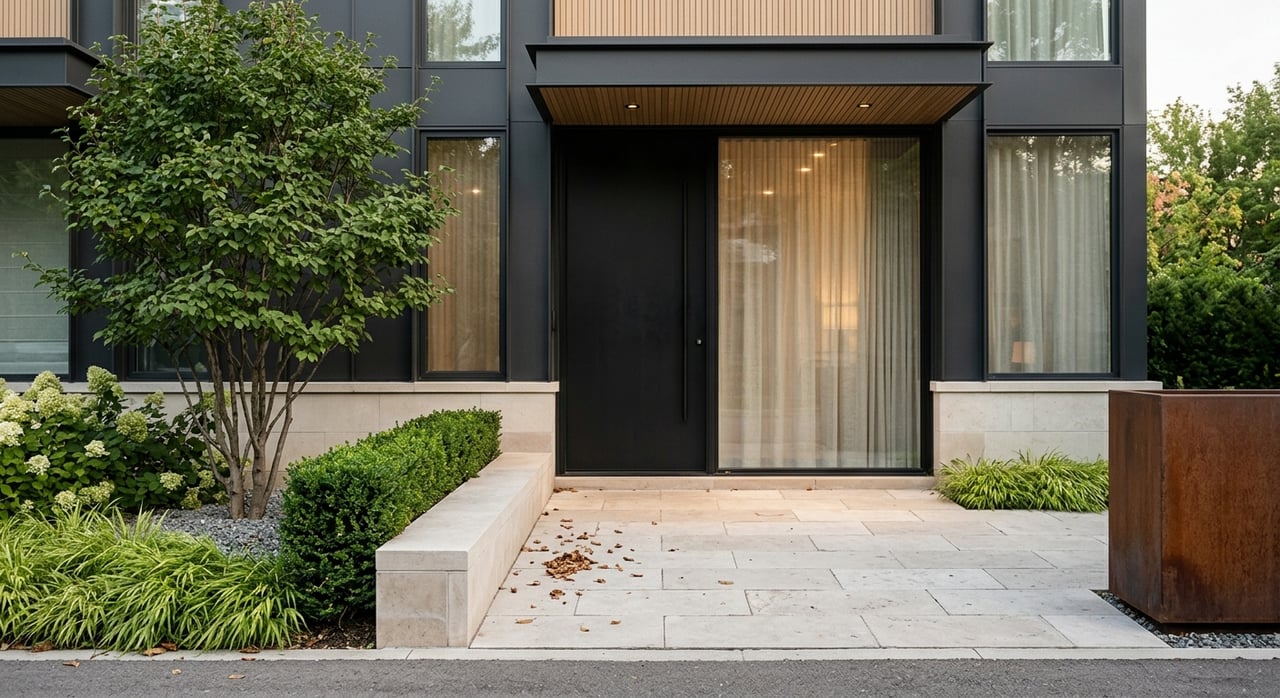
Ever wonder why Yorkville feels so polished, yet never entirely predictable? For design-minded buyers and sellers, that is the neighborhood’s real draw: within a few walkable blocks, you get heritage houses, thoughtful public spaces, galleries, museums, cafés, and boutiques that all contribute to a layered streetscape. If you want to understand what makes Yorkville more than a luxury shopping district, a day on foot tells the story beautifully. Let’s dive in.
Start With The Streetscape
A design-lover’s day in Yorkville begins before you step into a gallery or café. The neighborhood’s appeal is visible in the public realm itself, from granite paving on Bloor Street to herringbone sidewalks along Yorkville Avenue, decorative light posts, and seasonal planters.
Those details matter because they show how intentionally the district has been shaped. The Bloor-Yorkville BIA notes that the area includes nearly 1,200 business members and has invested heavily in streetscape improvements, which helps explain why the neighborhood feels cohesive rather than accidental.
See The Village Underneath
Yorkville’s current look makes more sense when you understand its history. It began as a 19th-century suburb, was incorporated in 1853, annexed in 1883, and still retains Victorian homes and gardened residential streets even as it evolved into a major cultural and retail district.
That history gives Yorkville a layered quality. City planning materials for the Yorkville-Hazelton heritage district connect today’s character to the original village street patterns and later infill, which is why the area reads as more than a uniform row of luxury storefronts.
Walk Through Yorkville Park
If you only stop in one public space, make it Village of Yorkville Park. The City of Toronto describes it as a unique display park whose garden features reflect Canada’s geographic diversity, and it remains one of the area’s most distinctive design anchors.
It also reveals something important about how Yorkville works. What was once a parking lot became a heavily used downtown public space with a fine-grain, lush, playful, and safe feel, according to a city public-realm study. That blend of utility and beauty is part of the neighborhood’s everyday appeal.
Explore Hazelton’s Heritage Texture
Hazelton Avenue is one of the best places to see Yorkville’s design personality up close. Here, the scale feels intimate, and the architecture shows the district’s heritage framework in a way that balances polish with character.
For art lovers, this stretch is especially rewarding. Gallery Gevik at 12 Hazelton and Ingram Gallery at 24 Hazelton both contribute to the area’s long-standing gallery culture, and Ingram stands out for its setting in a historic townhouse with two floors of Canadian art and a lower-level rare book store.
Add A Museum Stop
Yorkville is not only a boutique district. It also benefits from major cultural anchors nearby, with the Royal Ontario Museum serving as the area’s best-known institutional presence.
According to ROM, the museum holds 13 million artworks, artifacts, and specimens, and its Yorkville guide frames the neighborhood as a place where galleries, artisanal coffee shops, and boutiques sit within easy reach of one another. The Gardiner Museum adds another design-focused layer, offering a ceramics lens that broadens the neighborhood’s cultural identity.
Make Time For An Art Walk
Yorkville’s relationship with art is not new. City heritage research notes that galleries clustered here by the mid-1960s, reinforcing the neighborhood’s roots as a creative district long before its current luxury profile took shape.
That legacy still shows up in how you experience the streets today. The Bloor-Yorkville BIA promotes neighborhood art walks and seasonal programming such as Yorkville Murals and Icefest, which extend visual culture beyond interior spaces and into the public realm.
Pause At A Café
A good neighborhood reveals itself in its in-between moments, and Yorkville’s cafés are part of that story. A-OK Café is described by the BIA as a shopping-friendly espresso stop, while long-running spots like Trattoria Nervosa continue to serve as familiar neighborhood gathering places.
These stops matter because they soften the district’s luxury image. Instead of feeling like a place built only for special occasions, Yorkville starts to read as a livable area where culture, dining, and everyday routines fit together naturally.
Notice The Retail Curation
Yes, Yorkville is known for shopping, but the better way to think about it is curation. The BIA describes the area as home to flagship stores and one-of-a-kind boutiques, with some international brands choosing Yorkville as their only Canadian location.
That distinction helps explain why the neighborhood feels design-forward rather than generic. Spaces like The Webster, noted for its pastel-rose and art-deco appeal, and ISAIA, located in the former Sherriff’s House on Yorkville Avenue, show how retail here often interacts with architecture and interiors in a deliberate way.
Why Buyers Notice Yorkville
For buyers, Yorkville offers more than prestige. Its real strength is amenity density paired with design continuity, with shopping, dining, galleries, museums, and hotels compressed into a highly walkable, transit-friendly district.
If you value architecture, public space, and an orderly everyday environment, that combination can be compelling. Rather than treating the neighborhood as a destination you visit once in a while, many buyers see it as a place where a polished lifestyle can happen on foot.
Why Sellers Benefit From It
For sellers, Yorkville’s appeal is also practical. A neighborhood with a strong visual identity tends to be easier to present clearly, especially when buyers already understand the value of heritage character, cultural access, and a refined public realm.
That is where thoughtful marketing matters. When a home is positioned through its architectural story and neighborhood context, Yorkville’s distinctive streetscape and amenity mix can support a more complete picture of lifestyle value.
Yorkville Is More Than Luxury Retail
The simplest takeaway is this: Yorkville works because it layers history, design, and convenience into a compact district. Its Victorian homes, gallery culture, museums, upgraded streetscape, and tightly packed amenities create a neighborhood that feels both curated and lived-in.
For anyone buying or selling in Central Toronto, that distinction matters. Yorkville is not just a place of labels and storefronts. It is a neighborhood where urban design, heritage, and daily life meet in a way that continues to shape demand.
If you are considering a move in Yorkville or want a more design-informed perspective on Central Toronto real estate, Jason DeLuca offers thoughtful, neighborhood-first guidance tailored to how you want to live and what your property represents.
FAQs
Is Yorkville in Toronto only a shopping district?
- No. Yorkville also includes galleries, museums, restaurants, cafés, hotels, spas, health care providers, and heritage residential streets within a compact walkable area.
What makes Yorkville feel design-forward?
- Yorkville’s design identity comes from both architecture and public-realm planning, including heritage buildings, granite paving, herringbone sidewalks, decorative lighting, seasonal gardens, and carefully managed streetscape upgrades.
Which Yorkville places best show heritage and culture?
- Village of Yorkville Park, Hazelton Avenue, local galleries such as Ingram Gallery and Gallery Gevik, the Royal Ontario Museum, and the Gardiner Museum all help show the neighborhood’s mix of history, art, and contemporary urban design.
Why do Yorkville buyers care about streetscape?
- Buyers often value neighborhoods where public space, walkability, and nearby amenities create a polished and convenient daily experience, and Yorkville is known for that strong combination.
Why does Yorkville’s amenity mix matter for sellers?
- Yorkville’s dense mix of culture, dining, boutiques, and public spaces helps define a clear lifestyle story, which can strengthen how a home is presented to potential buyers.